10 sectors
Ten places a band has to work.
The product barely changes between these. What changes is how long the
band stays on, how wet it gets, and whether it has to open anything —
and those three questions decide the whole specification.
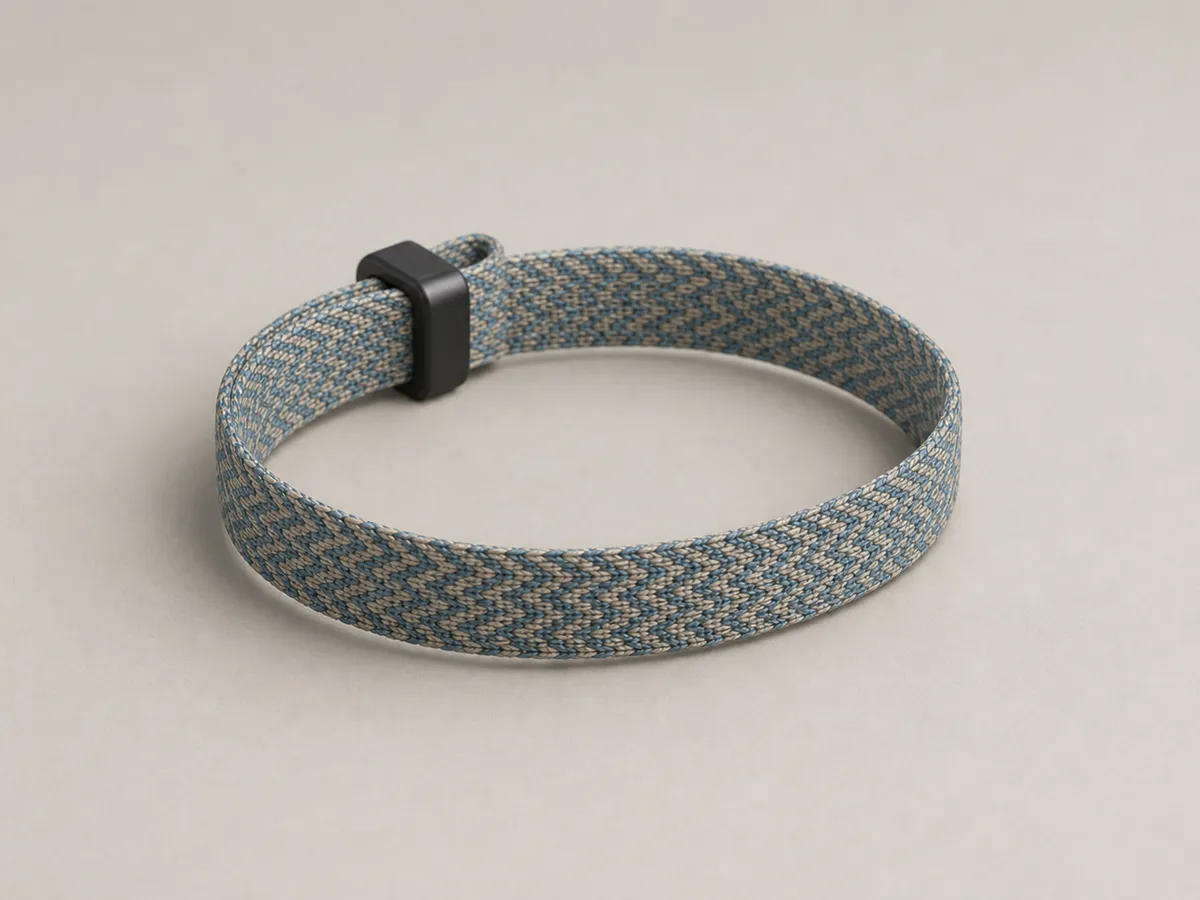
Usually silicone wristbands or RFID wristbands or RFID fabric wristbands
The band is issued once and expected to work for a week or a fortnight without a second thought. Where it is specified to carry a tab, the charge goes to the folio and is settled on departure, which removes the till queue at the swim-up bar. Where it is specified for access only, it still saves the front desk the replacement conversation at 11pm. Silicone and woven substrates are the two that reliably survive that wear period. What to specify
Usually paper wristbands or RFID paper wristbands or marine rope RFID wristbands
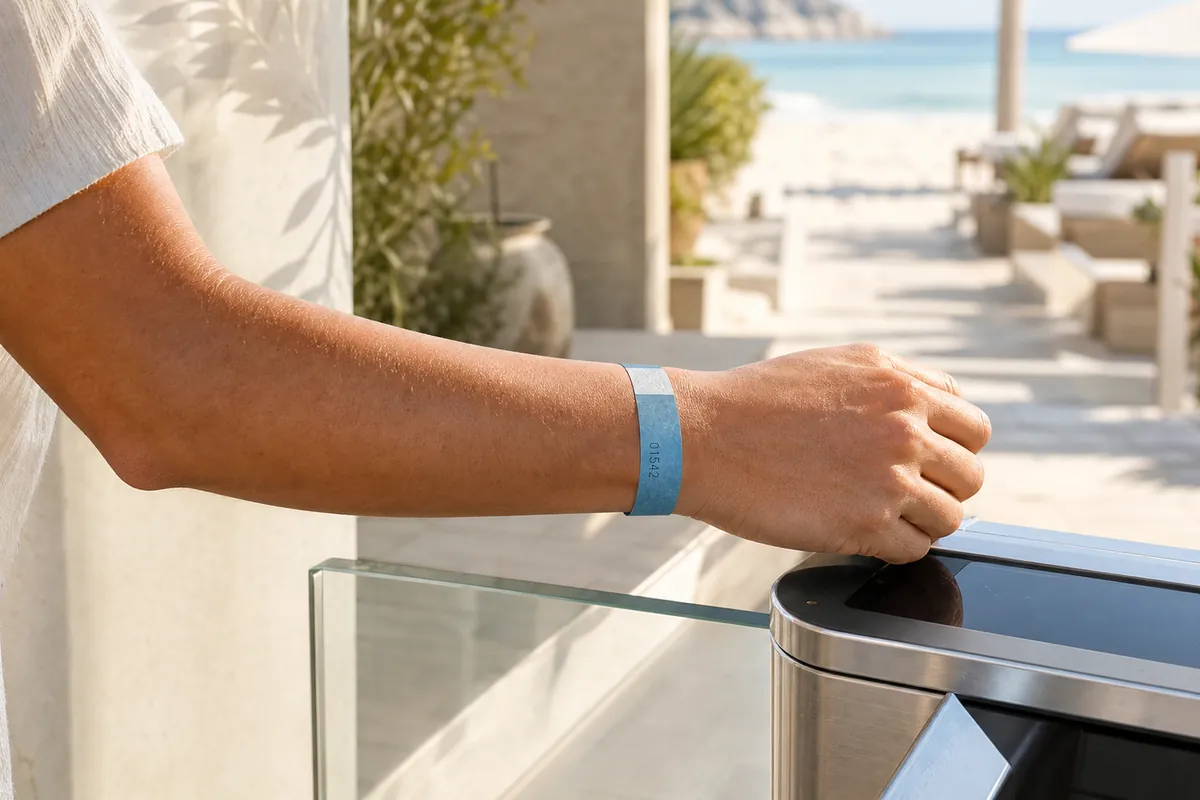
Day guests need something that ends when the day does. Tyvek is tamper-evident by construction: it cannot be removed intact, and an attempt to slit and re-adhere it leaves a visible scar. Colour-coding separates package tiers without anyone having to read anything, and sequential numbering gives you a reconciliation trail against passes sold. What to specify
Usually RFID wristbands or wooden RFID wristbands or cork RFID wristbands
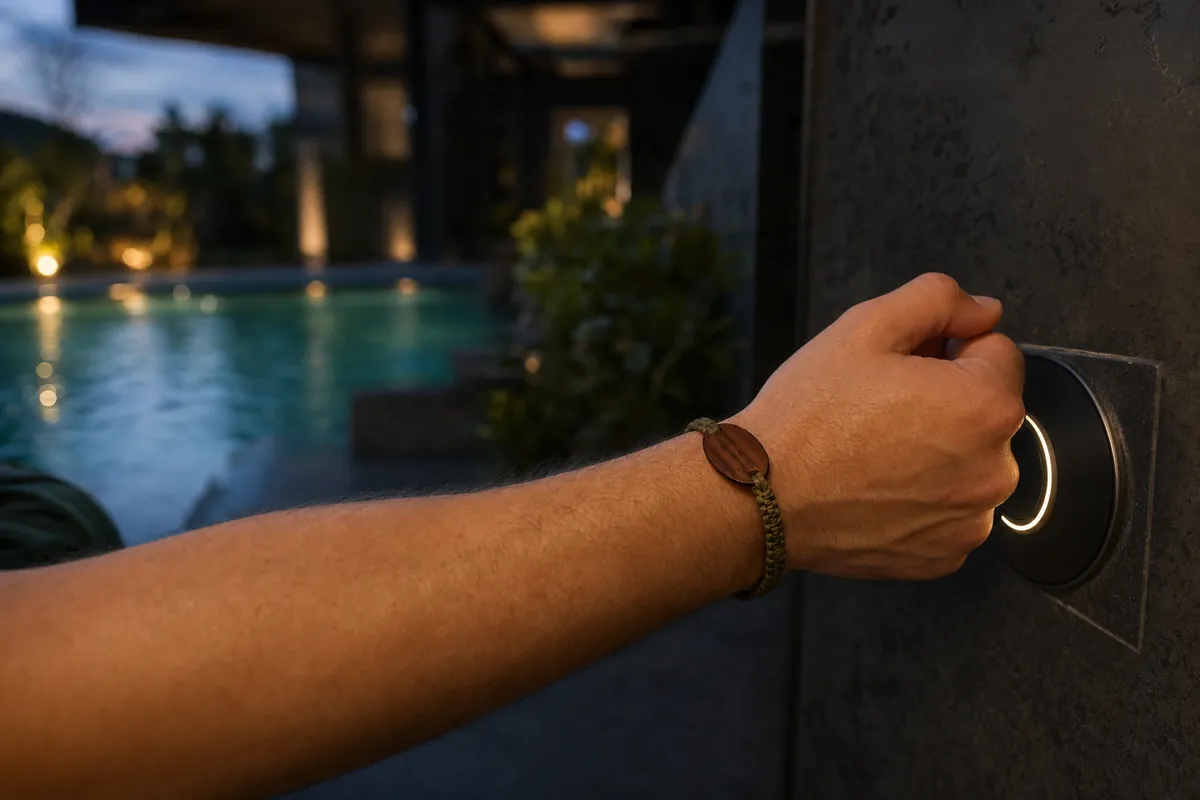
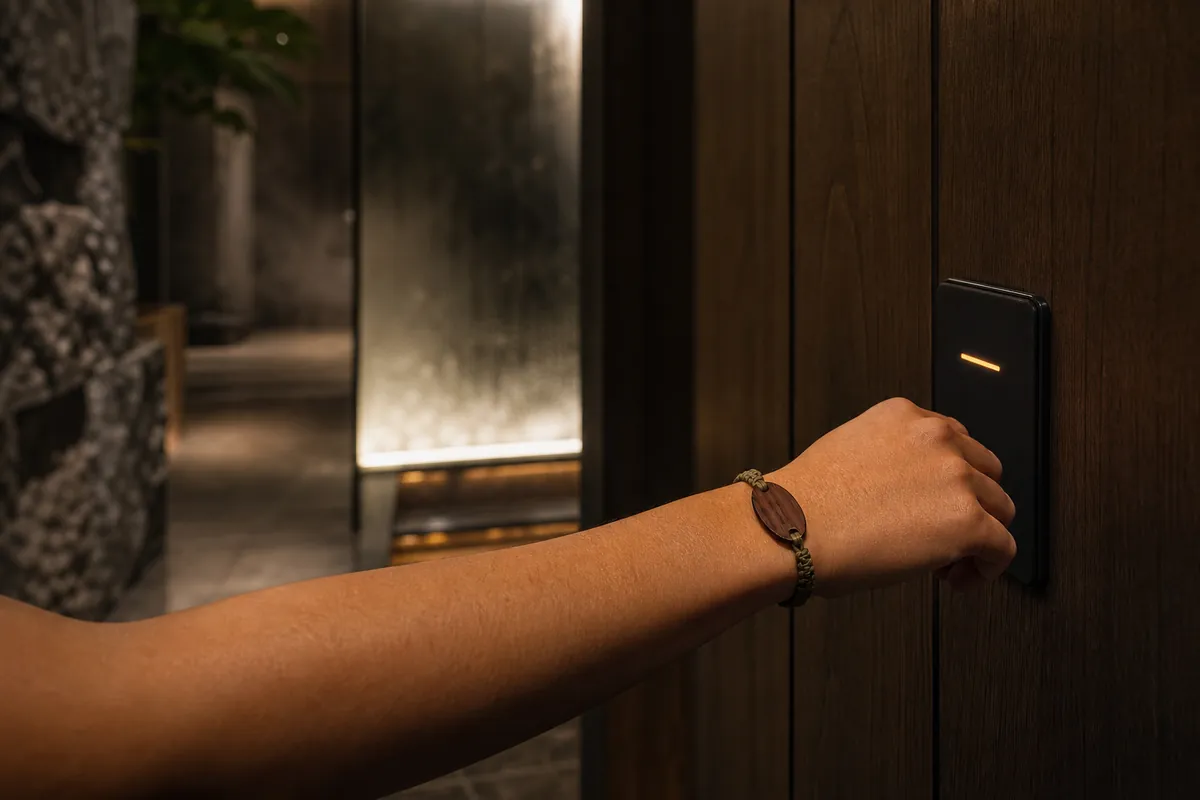
A guest with spa access included should not need a second card, and a guest without it should not need a conversation at the door. Where the property’s system supports zone rules, the band can be encoded to respect them. That is a capability of your access control rather than of the band — we confirm what your system can do before quoting, and specify the transponder to match. What to specify
Usually silicone wristbands or RFID silicone wristbands or vinyl wristbands
Everything gets submerged dozens of times a day and coated in high-factor sun cream, which is what actually destroys wristbands — the failures here are chemical rather than mechanical. Silicone is unaffected by both. Where lockers or cashless kiosks are involved the band carries a transponder as well, and coated paper becomes viable for single-day admission at volume. What to specify
Usually paper wristbands or RFID fabric wristbands or NFC wristbands
The security requirement dominates. A one-time closure that cannot be reopened without visible damage is the baseline; sequential numbering against tickets sold is the reconciliation. For multi-day events a woven band with a sealed clip is more secure than an adhesive closure and considerably more comfortable on day three. What to specify
Usually staff wristbands or silicone wristbands or RFID paper wristbands
Usually ordered alongside a guest run on the same artwork approval, which is why it rarely adds to the lead time. Colour separates departments at a glance; where the band also carries access rights, those are encoded to the scheme confirmed for the property. Kitchen and grounds work is harder on a band than anything a guest will do to it, so silicone is the default here. What to specify
Usually wooden RFID wristbands or cork RFID wristbands or beaded RFID wristbands
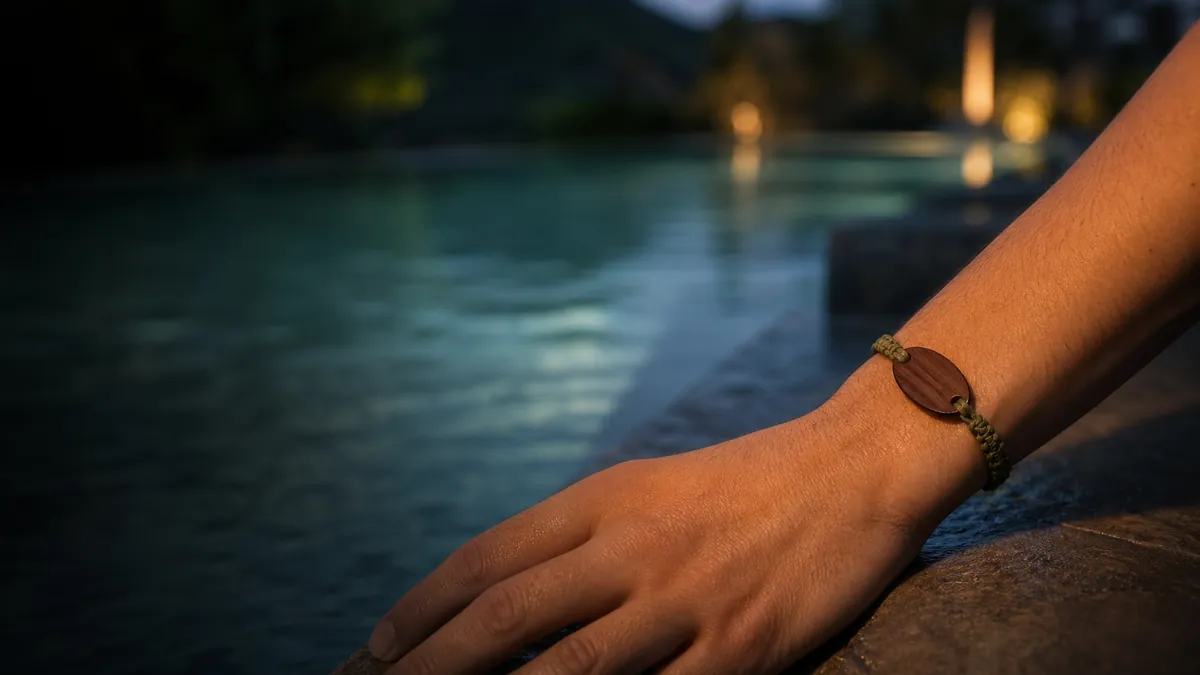
Small properties buy differently: one person decides, the volume is a fraction of a resort order, and the band is judged on how it looks in a guest's hand before anything else. The constraint is the minimum run, and the answer is usually a single undated design ordered once a year rather than a seasonal programme. What to specify
Usually cork RFID wristbands or recycled RFID wristbands or wooden RFID wristbands
Properties with a published environmental position are the ones most likely to be asked to justify what they hand a guest. That makes the paperwork as important as the material: a documented recycled content, a harvest cycle that can be described accurately, and a refusal to describe anything as biodegradable when it is not. What to specify
Usually RFID silicone wristbands or RFID fabric wristbands or wooden RFID wristbands
Mountain properties invert the usual assumptions. The band is under a jacket cuff and a glove rather than on a bare wrist, the guest moves between sub-zero outside and a hot spa inside, and the wellness area is the busiest part of the building at four in the afternoon. What to specify
Usually wooden RFID wristbands or RFID silicone wristbands or NFC wristbands
Club environments are about entitlement rather than access. Almost nobody is stopped at a door; what matters is knowing quickly whether a person is a member, a member's guest or a green-fee visitor, and charging accordingly. The band has to do that without looking out of place in a clubhouse. What to specify