Home / Wristbands / RFID silicone wristbands


Band 04
RFID silicone wristbands
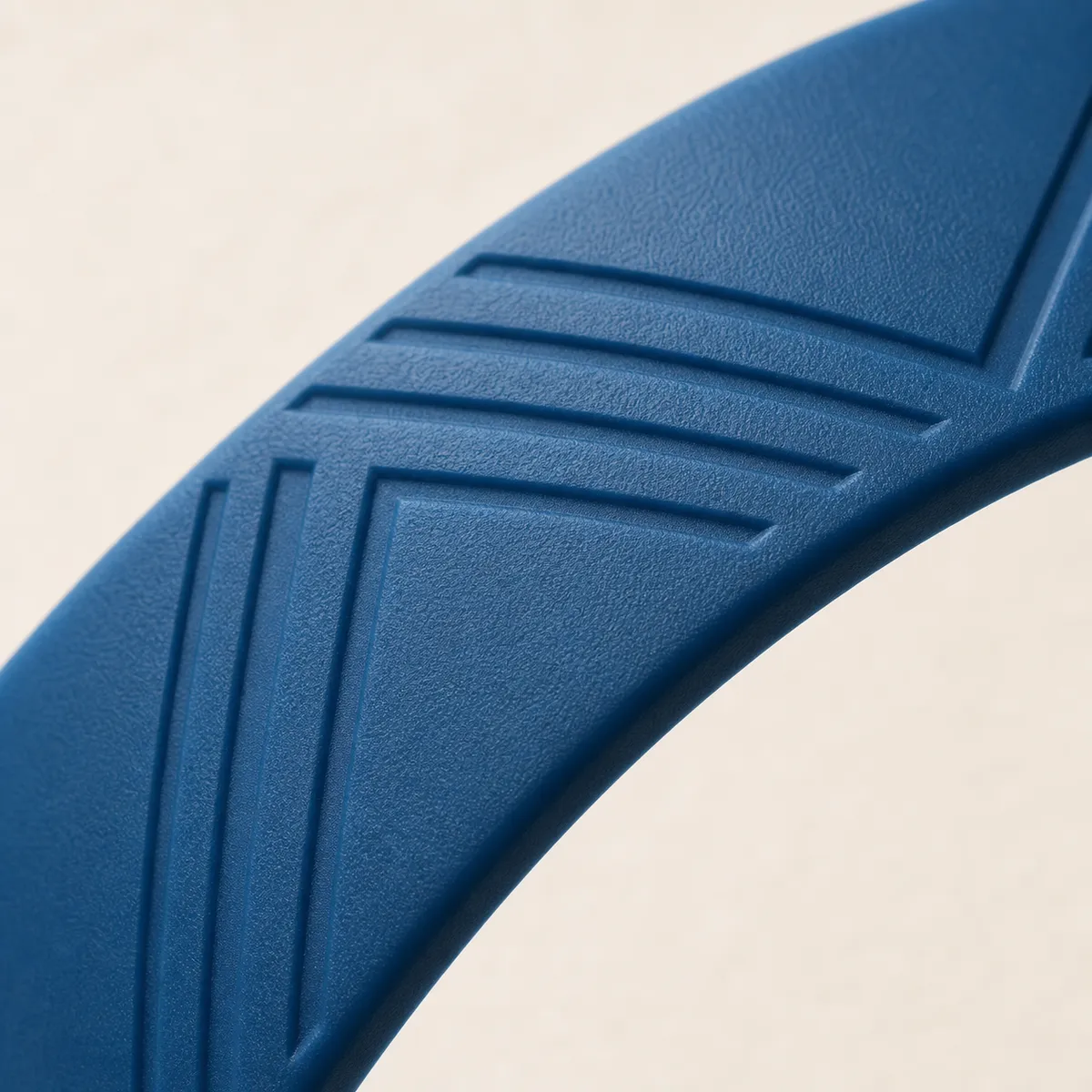
Where a band has to open a door in May and still open it in September, this is the construction. The transponder is over-moulded rather than pocketed, which means the silicone is continuous around it and there is no glued seam to fail. It is the heaviest and the most expensive band in the range per unit, and on a season-length stay it is the cheapest per wrist per week.
| Construction | Transponder over-moulded, no glued seam |
|---|---|
| Silicone | Solid moulded, 50 Shore A |
| Frequency | 13.56 MHz |
| Transponder | Entry, standard or high-security HF |
| Sizes | Child, adult, adult wide |
| Closure | Continuous loop or adjustable slider |
| Branding | Debossed, embossed or screen-printed |
| Working life | A full season of daily wear |
| Lead time | 21 days production, after artwork and technical approval |
Compatibility
Bands are encoded to work with the lock and point-of-sale systems your property already runs. We supply entry, standard and high-security HF transponders at 13.56 MHz, and 125 kHz where a property still runs a low-frequency estate.
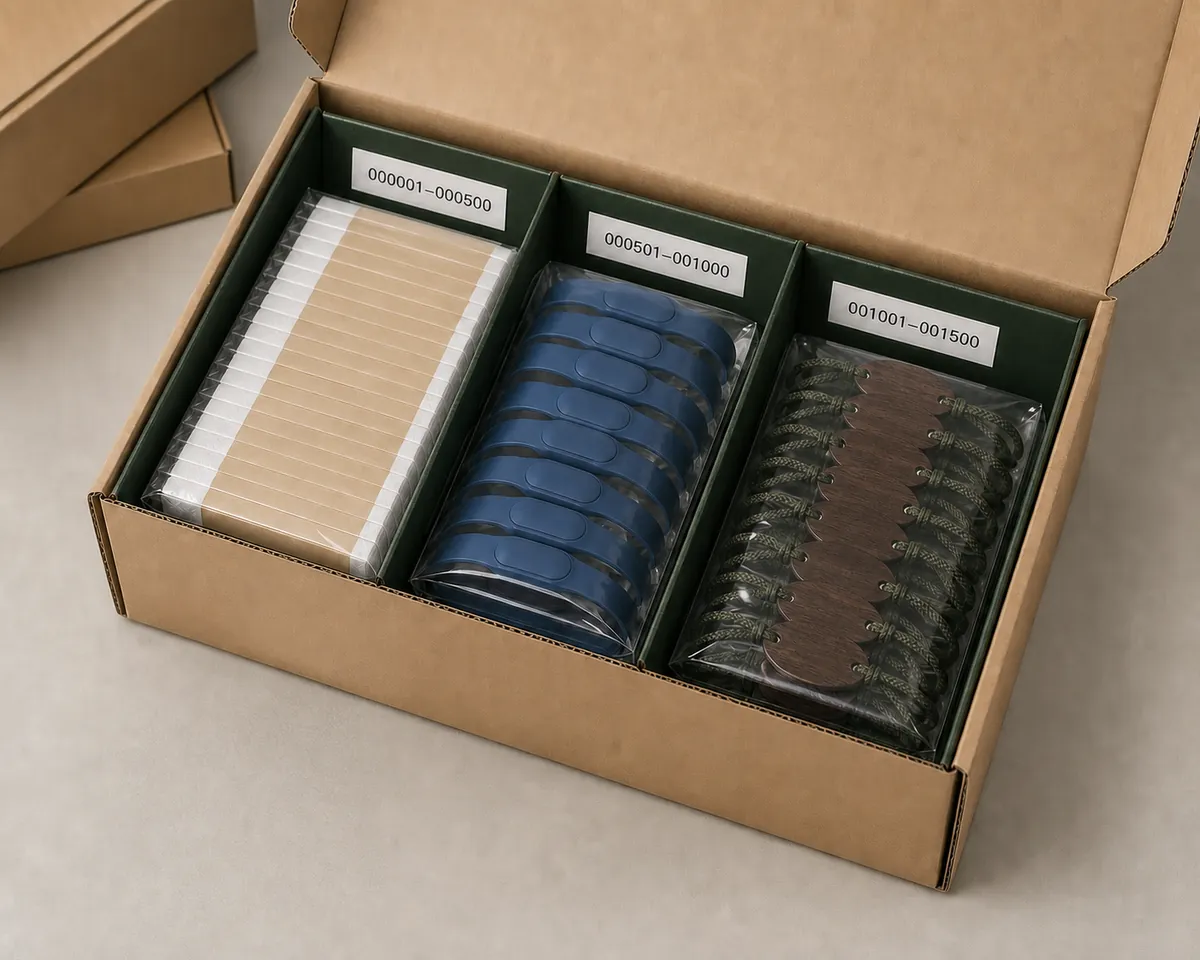
Name the system on your enquiry and send a spare card if you have one. Bands arrive in sequential blocks, ready to issue, with nothing to program on site.
All third-party marks are the property of their respective owners. Any reference indicates compatibility only and does not imply affiliation or endorsement.
Substrates
Available in silicone.
The construction is fixed; the substrate is the decision. This is where wear period, water behaviour and unit price are actually settled.
Why over-moulding and not a pocket
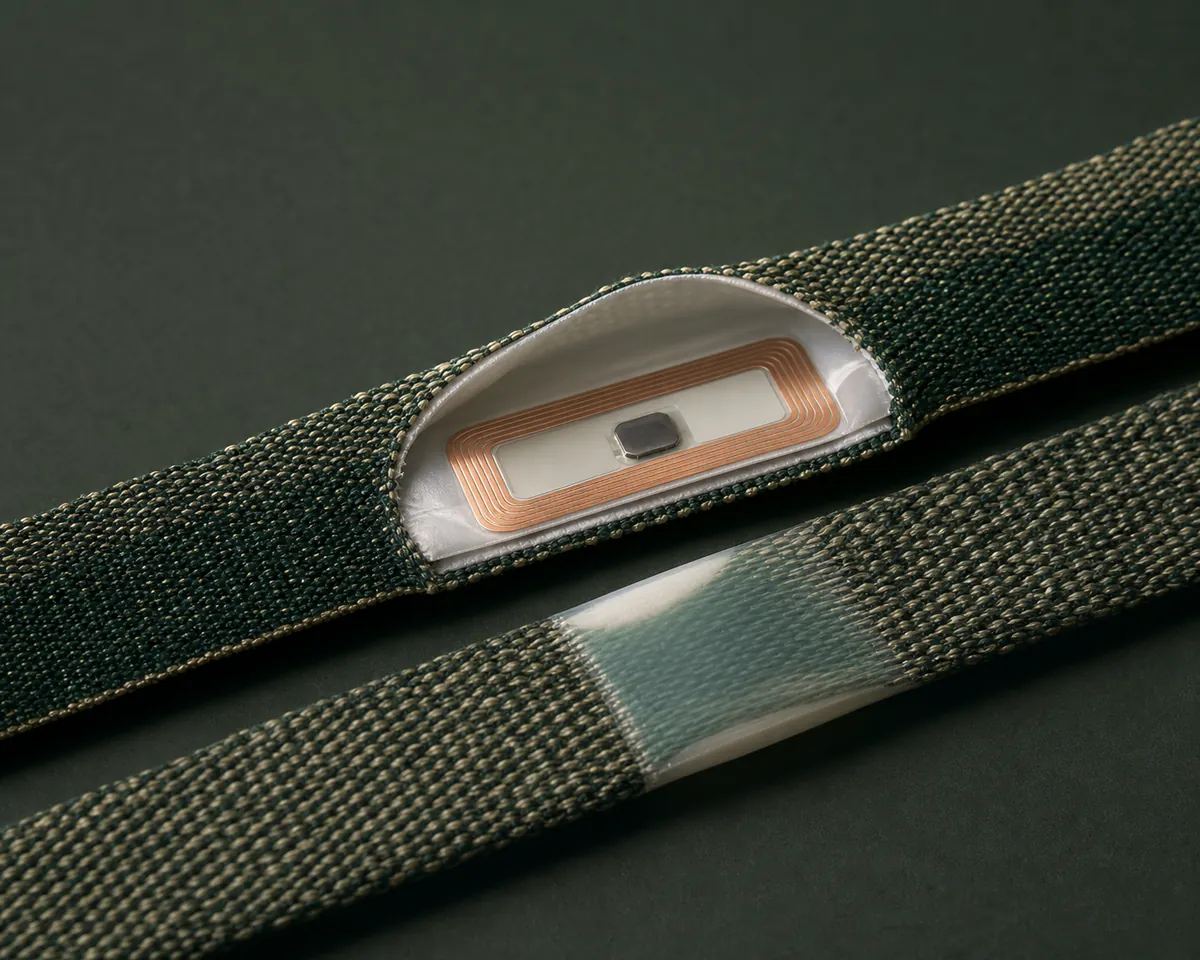
There are two ways to put a transponder inside silicone. The cheap way is to mould the band with a cavity, drop the inlay in and close the cavity with a glued or welded plug. The expensive way is to place the inlay in the tool and mould the silicone around it in a single shot. Both produce a band that works on the day it is delivered. Only one of them still works in September.
The failure mode of a pocketed band is not water reaching the chip — a modern inlay is laminated and largely indifferent to moisture. It is the plug. A glued plug sits in constant flexion at exactly the point where the band is thickest and stiffest, and the bond line is the first thing sun cream gets into. Once the plug lifts, the band snags on towels and bag straps and a guest picks at it, and a picked band comes back to the desk in two pieces.
Over-moulding removes the bond line entirely. The silicone is one continuous body and the inlay is suspended inside it, so there is no interface to open. The trade is tooling: the inlay has to be positioned to a tolerance in every shot, and a band moulded around a misplaced inlay is scrap rather than a rework. That is why this construction carries a longer lead time than plain silicone and why the minimum run matters more here than anywhere else in the range.
The practical consequence for a property is that read performance stays flat. A band with a lifting plug reads slightly worse each week as the inlay works out of position relative to the antenna plane, and staff read that as "the readers are getting worse". They are not. Fixing the band fixes the reader complaints, which is the whole argument for paying more per unit at the start of a season.
What it is used for
- All-inclusive guests staying a week or longer
- Season passes at beach and pool clubs
- Staff credentials that are worn every shift
- Any band that must survive daily sun cream
What ships with the order
- Material declaration for the substrate supplied
- Transponder type and encoding record, per block
- Batch and quantity reconciliation per carton
- Artwork proof as approved, for your records
FSC-certified material options available with supporting production documentation.


No obligation · reply within one working day
Price RFID silicone wristbands at your volume.
Runs start at 500. Send the quantity and the season length and we come back with a unit price, a delivery date, and samples of the recommended substrate.